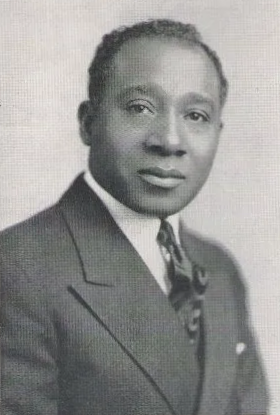
More than a year ago, the Canadian Art Song Project launched the R. Nathaniel Dett Song Research Project with an ambitious goal: to identify, acquire, study, and document all currently known works for voice and piano by R. Nathaniel Dett — one of the most important Black composers and performers in Canadian history.
We are pleased to share that the project has now reached a major milestone.
Assembling the Collection
Over the past eighteen months, CASP has assembled and reviewed all currently known works for voice and piano by Dett, including early manuscripts, published art songs, and arrangements of spirituals. While Dett is widely celebrated for his contributions as a composer, pianist, conductor, and educator, his songs have received comparatively little attention from performers, scholars, and publishers. This project has revealed a remarkably rich and varied body of work spanning more than four decades of his creative life.
Locating these materials required correspondence with several institutions, including the Library of Congress, the Sibley Music Library at the Eastman School of Music, and the Niagara Falls, NY Public Library. CASP is particularly grateful to the staff at the Sibley Music Library and the Niagara Falls, NY Public Library for their invaluable assistance in helping us access scores and source materials.
The Project
Initiated and led by CASP Co-Artistic Director and Managing Director Lawrence Wiliford, the project has involved archival research, score acquisition, manuscript transcription, artist interviews, and collaborations with performers, educators, librarians, and researchers across Canada and the United States.
The 2025–26 season focused on the documentation phase. Through collaborations in Toronto, at the Eastman School of Music, and at Oberlin Conservatory of Music, artists prepared, performed, discussed, and documented all currently known works for voice and piano by Dett — more than thirty songs spanning the years 1902 to 1943.
The repertoire encompasses a wide range of musical styles and influences: original art songs, settings of literary texts (including Dett’s own poetry), and spiritual arrangements that reflect his lifelong commitment to elevating Black musical traditions within the concert music world. Collectively, these works offer a fascinating portrait of a composer whose voice was continually evolving while remaining deeply rooted in both classical and African diasporic musical traditions.
Contributing Artists
CASP is deeply grateful to the many artists who contributed their time, expertise, and artistic insight to this phase of the project.
In Toronto, participating artists included Jonelle Sills, Jorell Williams, Queen Hezumuryango, Ineza Mugisha, Dr. Melissa Davis, pianist Alexa Belgrave, Dr. Steven Philcox, and Rashaan Allwood. The project also thanks Dr. Melissa Davis and the School of the Arts, Media, Performance & Design at York University for their support of the Toronto documentation sessions.
At the Eastman School of Music, participating artists included Dr. Alison D’Amato, Joshua Conyers, Kearstin Piper Brown, and Dr. Crystal Sellers Battle. Eastman collaborators also presented a public recital devoted to songs by Dett, sharing this repertoire with students, faculty, and the broader community.
At Oberlin Conservatory of Music, documentation recordings were contributed by students Amelia Reines, Ella Vaughn, and Venus Minaya, alongside faculty artist Dr. Tania Lokhina. The project also benefited from the guidance of faculty members Dr. Katherine Jolly, Dr. Courtney Andrews, Dr. Tania Lokhina, and Dr. Martha Guth.
What’s Next
Beyond the documentation recordings themselves, the project created meaningful opportunities for artistic exchange across institutions and generations of musicians. Faculty artists, professional performers, and students contributed their perspectives on the repertoire’s musical qualities, performance challenges, historical context, and contemporary relevance — conversations that have become an integral part of the project’s documentation and evaluation process.
One of the most rewarding aspects of this work has been witnessing artists encounter these songs for the first time. Again and again, participants have expressed surprise at the quality, individuality, and emotional depth of the music — reinforcing our belief that Dett’s songs deserve far greater visibility within the international art song repertoire.
As the project moves forward, CASP will continue reviewing the gathered materials and exploring ways to increase awareness of Dett’s songs among performers, educators, researchers, and audiences. We look forward to sharing further discoveries as this work continues.
The R. Nathaniel Dett Song Research Project has been made possible through the generosity and collaboration of many individuals and institutions. The project gratefully acknowledges the financial support of the Canada Council for the Arts and thanks Lisa Santoprete for her assistance in gathering and organizing materials through the University of Toronto Work Study Program. Our sincere thanks to all of the artists, educators, archivists, librarians, and supporters who have helped bring these remarkable works back into the conversation..
